A water bill that jumps with no change in habits almost always means water is leaving the pipes somewhere you cannot see: under the slab, in the yard, inside a wall, or straight down a toilet. Here in Contra Costa County most water bills arrive every two months (EBMUD) or monthly, depending on your provider, so a leak can run for weeks before the number shows up. The sooner you narrow it down, the less you pay for water and the less damage it does.
Start with the two-minute meter test
- Make sure nothing in the house is using water: no running appliances, ice maker off, irrigation off.
- Find your water meter, usually in a concrete box at the sidewalk or curb. Lift the lid (a flat screwdriver helps) and the register cover.
- Look for the low-flow indicator: a small triangle, star or spinning dial separate from the main numbers. On newer digital meters, it is a flow icon or a dripping-faucet symbol.
- If the indicator moves with everything off, water is flowing somewhere. Note the reading, wait 30 minutes without using water, and read it again. The difference is your leak rate.
Now close the main shut-off valve where the pipe enters the house (often near the hose bib by the front corner). If the meter stops, the leak is inside or under the house. If it keeps moving, the leak is in the service line between the meter and the house, or in the irrigation system.
The usual suspects, in the order we check them
1. A toilet flapper
The most common cause by far, and the easiest to miss because it is silent. Put a few drops of food coloring in the tank, do not flush, and wait 15 minutes. Color in the bowl means the flapper is letting water through. A worn flapper or a mis-set fill valve can waste 200 gallons a day without a sound. The fix is cheap; if a toilet is 20 years old and needs more than a flapper, replacing it with a WaterSense model usually pays for itself on the bill.
2. Irrigation
A cracked lateral line, a stuck valve or a broken sprinkler head on a timed system can run thousands of gallons a month into the lawn. Turn the controller off at the meter test above; if the indicator stops, start with the irrigation. Look for a green stripe, a soft spot or a geyser at 5 a.m.
3. The service line from the meter to the house
Older homes in Martinez, Concord and Pleasant Hill often still have the original galvanized steel or thin copper service line, buried in clay soil that shifts every season. These leak underground for months. Signs: a wet patch between the curb and the house, unusually green grass along the line, a drop in water pressure, or the meter running with the house valve closed. We locate the line electronically and replace it with new PEX or copper, often without a full trench.
4. A slab leak
Homes built on a concrete slab in Concord, Walnut Creek and the San Ramon Valley run their hot and cold lines under the floor. When one fails you may notice a warm spot on the floor, a hissing sound when the house is quiet, a water heater that runs constantly, cracked tile or moisture at the base of a wall. Slab leaks on the hot side are more common because hot water corrodes copper faster. We find them with acoustic and thermal equipment so the repair opens one small area, or we reroute the line overhead and leave the slab alone.
5. A failed pressure regulator
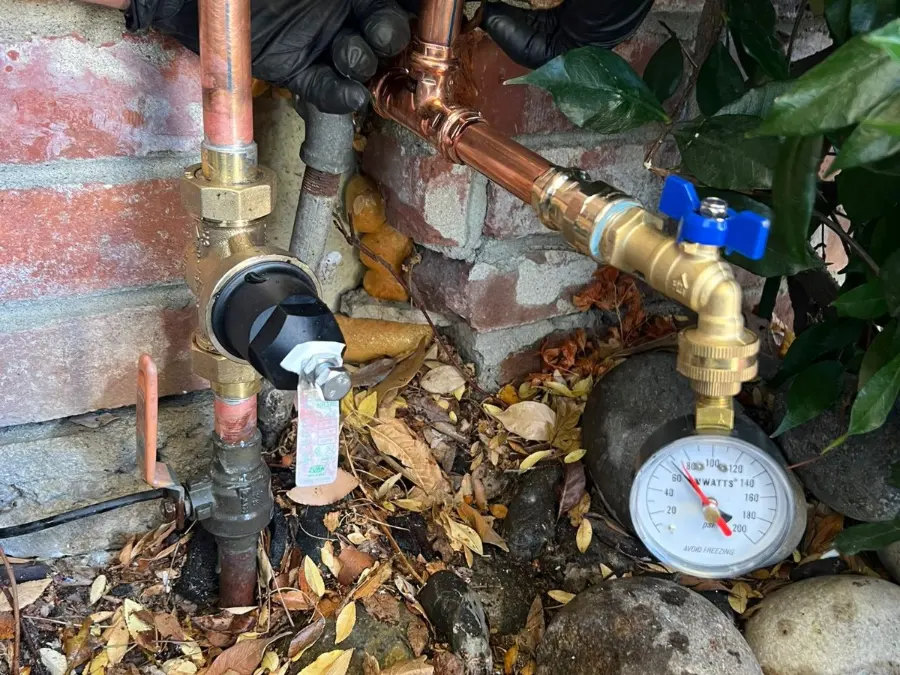
Not a leak by itself, but the cause of many. Hillside neighborhoods in Martinez, Lafayette and Orinda can see street pressure above 100 psi. When the regulator at the main fails, every fitting, supply hose and toilet valve in the house takes the hit, and the T&P valve on the water heater starts dumping water. A gauge on a hose bib tells us in a minute. Normal is 50–70 psi.
6. Water softeners, RO systems and hidden fixtures
A softener stuck in regeneration, a reverse-osmosis unit with a failed shut-off, a hose bib left on behind the shed, a humidifier line, a leaking pool auto-fill. We ask about every one of these on the phone because they are easy to overlook.
Meter moving and you can't find it?
Electronic leak detection across Contra Costa County. We find it with instruments, not holes, and give you a written repair price before we open anything.
When to stop looking and call
If the meter moves with the house valve closed, if you have signs of a slab leak, or if you have checked the toilets and irrigation and the meter is still running, you have reached the point where guessing costs more than detection. Our leak detection service uses acoustic listening, thermal imaging and line tracing to pinpoint the leak before we cut anything. For an underground service line, that means one small excavation instead of a trench across the lawn.
About your bill
Bring the leak to the water provider's attention once it is repaired and keep the invoice. Policies on one-time bill adjustments for repaired leaks vary by agency and change over time, so it is worth asking EBMUD or Contra Costa Water District directly; some will review a bill when you provide proof of repair. Either way, the fastest way to lower the next bill is to stop the leak this week. If a leaking water heater is part of the picture, our guide to a water heater leaking from the bottom walks through what to do.
Common questions
Why is my water bill high when nothing is leaking?
Most hidden leaks are silent: a toilet flapper, a buried service line, a slab leak or an irrigation line. Do the meter test with all water off; if the low-flow indicator moves, water is leaving the system somewhere and the next step is to isolate inside versus outside the house.
How do I know if I have a slab leak?
Warm spots on the floor, a hissing or running-water sound when the house is quiet, a water heater that never shuts off, cracked tile or damp flooring, and a meter that runs with every fixture off. Electronic leak detection confirms the location without opening the slab.
Will EBMUD or Contra Costa Water District fix a leak on my property?
No. The agencies repair leaks on the street side of the meter and the meter itself. The service line from the meter to the house, and everything inside, is the owner's responsibility. Ask the agency about a bill adjustment after the repair; policies vary.
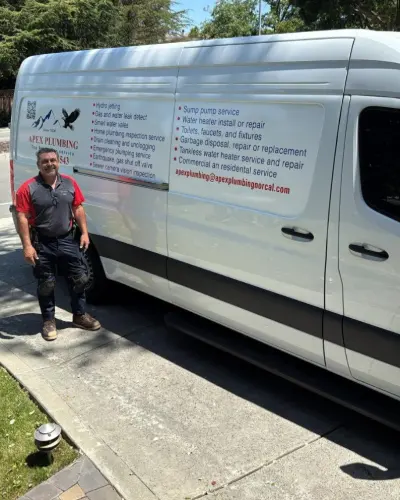
Nick, owner of Apex PlumbingLicensed C-36 plumbing contractor (#1115087) based in Martinez, serving all of Contra Costa County since 2024 with 200+ five-star Google reviews. Questions about this article? Call (925) 226-8543, any hour.