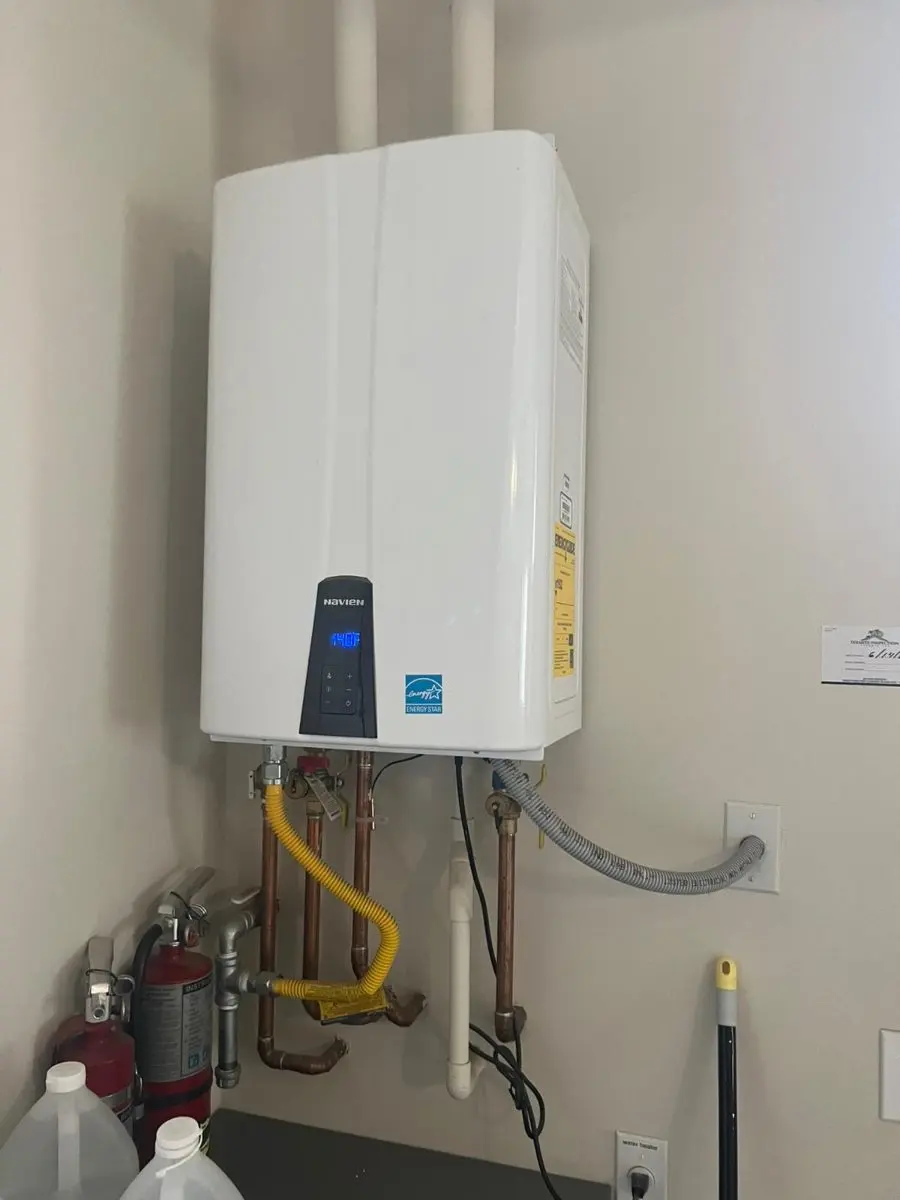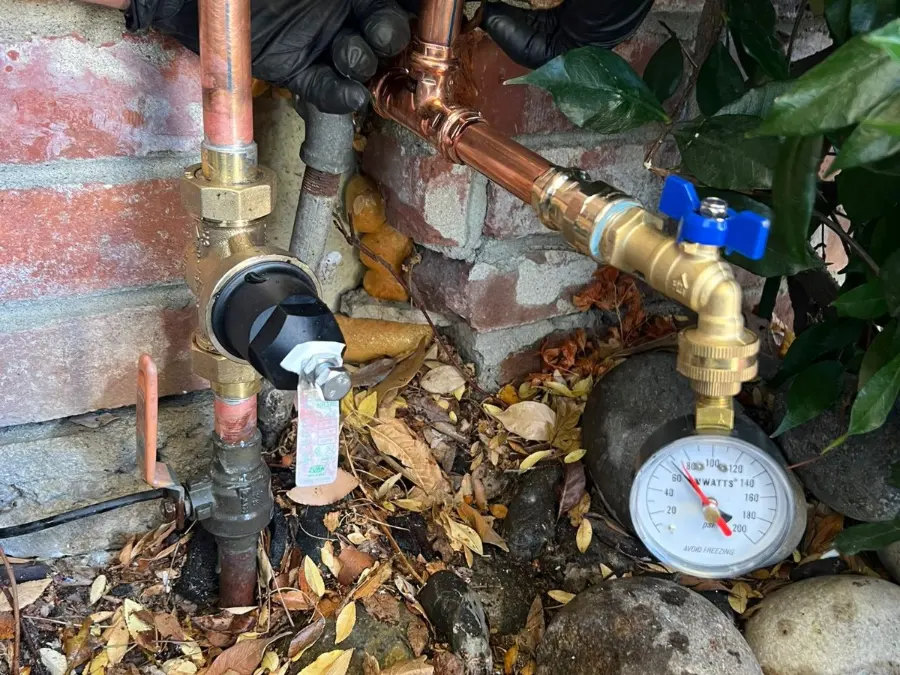
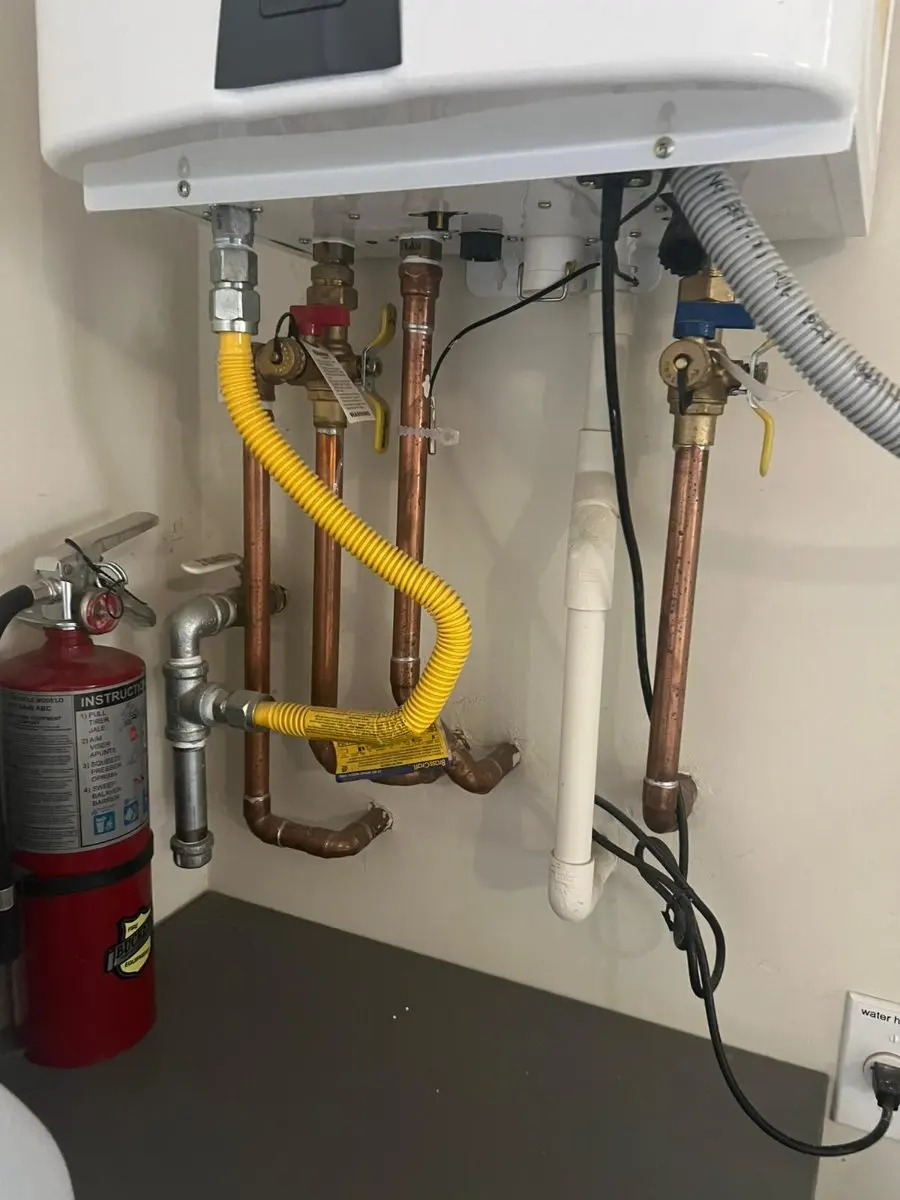
A puddle under the water heater is one of those problems that is either minor or urgent, with not much in between. The good news is that you can usually tell which one you have in about five minutes, before you call anyone. Start with the safety steps, then work through the four causes below.
First, do these three things
- Shut off the fuel. On a gas heater, turn the gas control knob to OFF (or "Pilot" if the manual says so). On an electric heater, switch off its breaker at the panel. Never run an electric element dry.
- Shut off the cold water supply. There is a valve on the cold pipe entering the top of the tank. Turn it clockwise until it stops. If the valve is stuck or crumbles, close the main house shut-off instead.
- Protect the floor. Towels and a bucket under the drain valve buy you time. If the heater is in a closet next to finished flooring or drywall, move what you can; a 50-gallon tank can put out a surprising amount of water.
If water is actively streaming rather than dripping, stop reading and call us at (925) 226-8543. We run 24/7 emergency service across Contra Costa County and can usually have a replacement in the same day.
Where the water is really coming from
Water runs downhill, so a leak that shows up at the bottom of the tank does not always start there. Dry the area with a towel, then watch for a few minutes.
1. The temperature-and-pressure (T&P) relief valve
This is the brass valve on the side or top of the tank with a pipe running down toward the floor. If water drips from the end of that pipe, the valve is doing its job: either the tank is overheating or the pressure in your plumbing is too high. High pressure is common in hillside neighborhoods in Martinez, Pleasant Hill and Lafayette, where street pressure can exceed 100 psi. The fix is usually a new T&P valve plus a pressure regulator or an expansion tank, not a new water heater.
2. The drain valve
The small spigot near the bottom of the tank is used to flush sediment. Cheap plastic drain valves weep after a few years, especially after someone has used them once. A dripping drain valve is a quick repair: we replace it with a brass ball valve, and it is often done in under an hour.
3. Condensation
A gas heater that has just refilled with cold water can sweat enough to leave a puddle, particularly on a cold morning in a garage. If the "leak" shows up only after heavy use and disappears when the tank is hot, it is condensation and not a problem. Persistent condensation on an older unit can point to a flue issue, which is worth a look.
4. The tank itself
If the bottom of the jacket is wet, there is rust streaking down the side, or water seems to come from under the burner compartment, the steel tank has corroded through. There is no repair for a failed tank. At this point the only question is how quickly it gets replaced.
Repair or replace: the rules we use
| Situation | What we usually recommend |
|---|---|
| Leak is from the T&P valve, drain valve or a fitting; tank under 8 years old | Repair the part. Add an expansion tank or pressure regulator if pressure is the cause. |
| Same, but tank is 10–12 years old | Repair if the budget demands it, but plan the replacement. The next failure will be the tank. |
| Water from the tank body, rust streaks, rumbling, or rusty hot water | Replace. A corroded tank can fail completely without warning. |
| Any leak on a tank older than 12 years | Replace. Parts money is better spent on the new unit. |
To find the age, look at the serial number on the manufacturer's label. Most brands encode the year in the first two digits or letters; if you send us a photo of the label we will tell you.
What a replacement costs in Contra Costa County
A like-for-like 40- or 50-gallon gas tank, installed to current code with permit, typically runs $2,000 to $3,500 in our area. The range depends on whether the old installation needs updating: seismic straps, a drip pan with a drain line, a proper T&P discharge pipe, a sediment trap on the gas line, and an expansion tank where the water district requires one. Units that are hard to access or need to be moved cost more. If you are considering switching to tankless or to a heat-pump unit, our guide to tankless vs. tank water heaters in Contra Costa covers the costs, rebates and the Air District's new rule.
Leaking right now?
Same-day water heater replacement across Martinez, Concord, Pleasant Hill and Walnut Creek. Upfront price before we start, old unit hauled away.
Why tanks fail early around here
Water in the Contra Costa Water District area (Martinez, Concord, Pleasant Hill, Clayton) is moderately hard, which means sediment builds on the bottom of a tank over time. Sediment insulates the water from the burner, so the steel overheats, "rumbles" and eventually fails. Flushing the tank once a year and checking the anode rod every three to four years is the cheapest insurance there is, and it is something we can do during any service visit. High street pressure, which is common on the hills around Martinez and Lafayette, stresses every fitting in the house, including the tank; a pressure regulator set to 60–70 psi pays for itself.
What happens when you call us
We will ask for the heater's age, fuel type and location, and whether the leak is a drip or a stream. For a repair, we carry T&P valves, drain valves and expansion tanks on the truck. For a replacement, we quote a firm price on the phone for standard installations, confirm it on site before we start, and leave you with a permitted, inspected installation and a receipt that lists everything we did. Local to Martinez, licensed C-36 #1115087, and open 24/7.
Common questions
Is a leaking water heater an emergency?
A slow drip from a valve is not, but shut off the water and fuel and get it looked at within a day or two. Water coming from the tank body is an emergency: the tank can fail completely and dump its full volume. Shut off the water and call us.
Can a water heater leaking from the bottom be repaired?
If the water is coming from the drain valve or the T&P relief line, yes. If the tank itself is leaking, no; the steel has corroded through and the only fix is a new water heater.
How long does a water heater last in Contra Costa County?
Tank water heaters here typically last 8 to 12 years. Hard water sediment and high street pressure shorten that; annual flushing and a pressure regulator extend it. Tankless units routinely last 20 years or more with annual descaling.
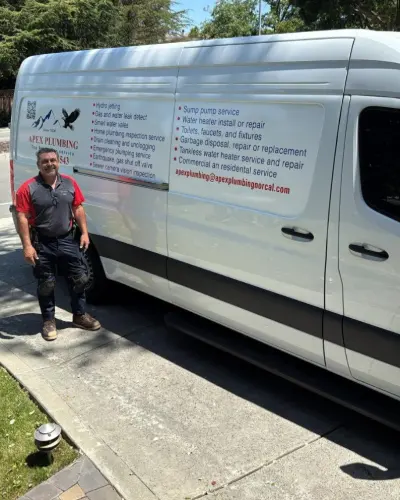
Nick, owner of Apex PlumbingLicensed C-36 plumbing contractor (#1115087) based in Martinez, serving all of Contra Costa County since 2024 with 200+ five-star Google reviews. Questions about this article? Call (925) 226-8543, any hour.