If you own property in Berkeley, El Cerrito, Kensington or Richmond, there is a line in your sale paperwork that catches people off guard: the sewer lateral certificate. It is a real requirement with real deadlines, and in our experience it is the single most common reason a West County escrow gets pushed back. The rest of Contra Costa County does not have a point-of-sale rule, which is why so many agents and sellers are surprised by it.
What a private sewer lateral is
Your private sewer lateral (PSL) is the pipe that carries wastewater from your house to the public sewer main in the street. In most of these cities you own and are responsible for the whole thing, from the foundation to the connection at the main, including the part under the sidewalk. Many laterals in Berkeley, El Cerrito and Richmond were installed between 1910 and 1960 in clay or cast iron. Clay joints let roots in, cast iron rusts from the inside, and both let groundwater into the public system, which is the reason these programs exist.
Which program applies to your property
This is where it gets confusing, because three different agencies run three different programs in the same few square miles.
| Where | Who runs it | What triggers it | Deadline |
|---|---|---|---|
| Berkeley | City of Berkeley (its own program) | Sale or transfer; a building permit for major construction such as a remodel; when the city finds the lateral may be a nuisance | Before close of escrow. The city may grant a 6-month extension with a $4,500 deposit, or with a signed contract from a licensed plumber for the work within 6 months. |
| El Cerrito, Kensington, Richmond Annex (Stege Sanitary District area) | EBMUD Regional PSL Program | Sale (title transfer); remodeling or construction over $100,000; a change in water meter size | At transfer, or a 6-month Time Extension Certificate with a refundable $4,500 deposit |
| Richmond (Richmond Municipal Sewer District) | City of Richmond, Sewer Lateral Compliance Ordinance (RMC 12.17) | Property in escrow to close | Lateral must be compliant within 60 days after close of escrow; buyer and seller sign an addendum naming who is responsible |
Note the Richmond split: the Richmond Annex neighborhood is served by Stege Sanitary District and falls under the EBMUD regional program, while the rest of Richmond follows the city's own ordinance. If you are not sure which side of the line a property is on, send us the address and we will tell you.
What the test actually involves
EBMUD area (El Cerrito, Kensington, Richmond Annex)
EBMUD requires a witnessed air or water pressure test of the lateral. A plumber plugs the line, pressurizes it and holds the pressure for the required period while an EBMUD inspector watches. A camera video on its own does not count. If the lateral holds, EBMUD issues the Compliance Certificate; if it does not, the lateral is repaired or replaced and tested again. A cleanout near the property line is needed to run the test, so homes without one get a cleanout installed first.
Berkeley
Berkeley's process is similar: your contractor applies for a PSL permit, inspects the lateral, makes any needed repairs and schedules a verification test with a city inspector. The city issues the Sewer Lateral Certificate when the lateral passes.
Richmond
Richmond's ordinance is video-based. A state-licensed plumber runs a camera from the foundation to the city main. If the line looks acceptable, the video is submitted to the city for review and a pass or fail decision. If the plumber recommends replacement, the lateral is replaced by a licensed plumber and the owner applies for the Certificate of Lateral Compliance.
What usually fails, and what the fix looks like
- Root intrusion at clay joints. The most common failure. A spot repair fixes one bad joint; a lateral with roots at every joint is replaced.
- Offset or collapsed sections from tree roots, soil movement or an old repair done without a permit.
- Cast iron that has rusted thin, usually in the section under the house. It may hold water but fail the pressure test.
- No cleanout at the property line. Required for the test and, in most of these jurisdictions, for compliance.
- Missing backwater device where the lowest fixture sits below the nearest upstream manhole.
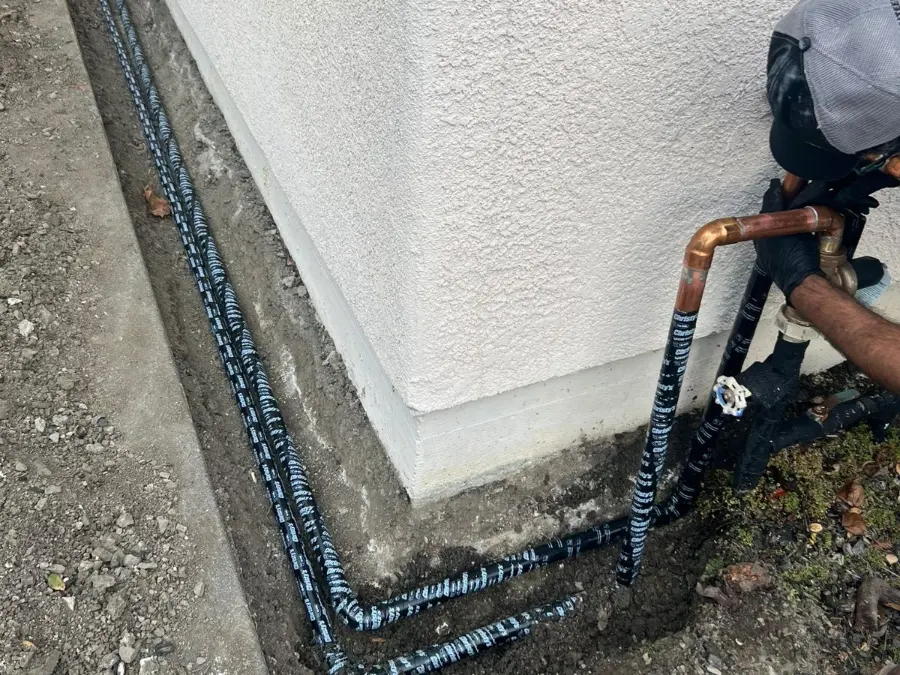
Where the lateral needs replacing, we use trenchless methods wherever the pipe allows it: pipe bursting pulls a new HDPE pipe through the old line from two small pits, so driveways, mature landscaping and sidewalks mostly stay intact. Where the old pipe has too many bends or has collapsed, we excavate and replace. Either way we pull the sewer permit, coordinate the inspection and submit the paperwork for the certificate. See our sewer services page for the full list.
Costs and timing
The test itself, including the camera inspection, is a modest cost. The repair is what varies: a cleanout installation or a spot repair is a few thousand dollars, a full trenchless replacement of a typical 40–60 foot lateral is more, and a long lateral under a busy street with a deep main is the expensive end. We put an exact price in writing after the camera inspection, and we can usually start within days, which matters when a 60-day or 6-month clock is already running. Agency fees (permits, inspection and certificate fees) are paid to the city or EBMUD and are listed separately on your quote.
In escrow and need a sewer lateral test?
We camera, pressure-test, repair or replace, and handle the certificate paperwork for Berkeley, El Cerrito, Kensington and Richmond. Fast scheduling for sales deadlines.
Buying a home anywhere in Contra Costa? Scope the sewer anyway
Outside the West County cities, nobody will make you test the sewer lateral before closing. We still recommend a sewer camera inspection on any home built before about 1980 in Martinez, Concord, Walnut Creek, Lafayette or Orinda. It is a small cost during your inspection contingency, and a failed lateral is one of the most expensive surprises a new homeowner can get. Our guide to the signs of tree roots in a sewer line explains what the camera usually finds in older neighborhoods.
Common questions
Does Berkeley require a sewer lateral certificate when selling a house?
Yes. The City of Berkeley requires a Sewer Lateral Certificate before close of escrow when a property is sold or transferred, and before a building permit is issued for major construction. The city may grant a six-month extension with a $4,500 deposit or a signed contract with a licensed plumber.
Is Richmond part of the EBMUD sewer lateral program?
Only the Richmond Annex, which is served by Stege Sanitary District, falls under EBMUD's regional program. The rest of Richmond follows the city's own Sewer Lateral Compliance Ordinance, which requires a licensed plumber's camera inspection and compliance within 60 days after close of escrow.
Does a camera inspection count as the EBMUD sewer lateral test?
No. EBMUD requires an air or water pressure verification test witnessed by an EBMUD inspector. We run the camera first to find problems, fix them, then schedule the witnessed test so it passes the first time.
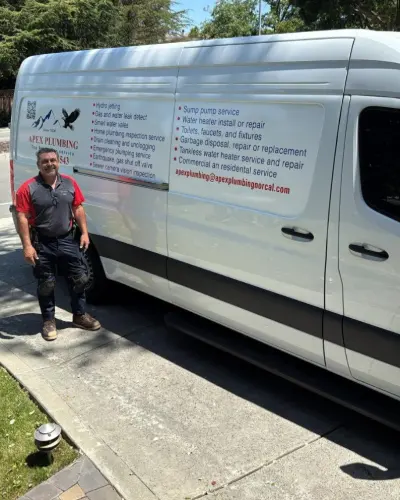
Nick, owner of Apex PlumbingLicensed C-36 plumbing contractor (#1115087) based in Martinez, serving all of Contra Costa County since 2024 with 200+ five-star Google reviews. Questions about this article? Call (925) 226-8543, any hour.