After a strong earthquake, the fire department's biggest problem is not collapsed buildings. It is gas. Appliances shift, flex connectors tear, pilot lights and sparks find the leak, and a house that survived the shaking burns. An automatic gas shut-off valve closes your gas service in the first second of strong motion, before anyone has to find a wrench in the dark. It is a small, one-time job, and in parts of Contra Costa County it is required.
How the valves work
There are two kinds of automatic shut-off devices, and the State of California certifies both:
- Seismic (earthquake) shut-off valves are motion-sensing. A weighted ball or pendulum inside the valve drops when the ground shakes hard enough (typically a magnitude 5.4 or greater nearby) and blocks the gas. Nothing electrical, no batteries, nothing to maintain beyond a visual check. After a trip, it is reset by hand once the house has been checked for leaks.
- Excess-flow valves are not motion-sensing. They close when gas flows far faster than normal, which is what happens when a line breaks. They also protect against a severed line that has nothing to do with an earthquake.
Both install on the house side of the PG&E meter. PG&E does not install, maintain or reset them; that is a licensed plumber's job, with a plumbing permit. Only valves on the California Division of the State Architect's certified list meet code. We install the certified units sized to your meter, which matters: a valve sized for a small house will starve a home with a pool heater, a large tankless unit and a range.
Why this county in particular
The Hayward Fault runs under Berkeley, El Cerrito and Richmond. The Concord–Green Valley Fault passes through Concord and heads north past Martinez and Benicia. The Calaveras Fault runs along the Danville, Alamo and San Ramon side of the county. The USGS puts the odds of a magnitude 6.7 or larger quake in the Bay Area in the next 30 years at roughly three in four. Nearly every home in Lafayette, Orinda and Moraga, and most of the older homes in Martinez and Concord, sits within a few miles of one of those faults with gas appliances that were installed before anyone thought about it.
When Contra Costa County requires a valve
Contra Costa County's ordinance code (chapter 718-8) requires an automatic gas shut-off device in designated buildings in the county's jurisdiction. Based on the county's own handout, the requirement is triggered by:
- New buildings constructed since April 2000.
- Additions, alterations or repairs to a residential or commercial building with a permit valuation over $15,000 (permits issued since April 2000).
- Sale of a building in the unincorporated county since January 2007: the valve must be installed before the sale agreement, or before close of escrow where there is one.
- Gas piping changes that involve replacing the gas meter.
The county's Building Inspection Division issues the plumbing permit for the valve. The incorporated cities inside the county (Martinez, Concord, Walnut Creek, Lafayette and the rest) adopt their own building codes, and many require a seismic valve when you pull a permit for a remodel or an addition, with some also requiring it at sale. Thresholds and dates get updated, so we confirm the current rule with your city's building department when we quote, and we flag it any time we do gas work that needs a permit.
What it costs
For a typical single-family home with a standard residential meter, a certified seismic valve installed with a permit generally runs in the few hundred dollars range, with larger meters and awkward meter locations costing more. It is a one-visit job, and we test the system and relight your appliances before we leave. If we are already on site for a water heater or a gas line, adding the valve is usually less because the permit and the trip are shared. Our gas shut-off and smart valves page lists what we install.
Want it done before the next one?
Certified earthquake gas shut-off valves installed with permit, usually in a single visit, anywhere in Contra Costa County.
Seismic valve vs. smart valve: which one?
Smart gas valves add a Wi-Fi-connected shut-off you can trigger from your phone, and some include gas and seismic sensors that close the valve automatically. They are a good fit if you travel, manage a rental, or want to close the gas remotely when a tenant reports a smell. They do need power and a network connection to do the remote part. A mechanical seismic valve needs nothing. Our usual advice is: every home near a fault should have a certified seismic or excess-flow valve, and a smart valve is a worthwhile addition on top, not a substitute.
What to do after it trips
If the valve closes in a quake, do not reset it right away. Smell for gas at every appliance, check that pilot lights are out, and look for displaced appliances or kinked connectors. If you smell gas anywhere, leave and call PG&E at 1-800-743-5000 from outside. If everything looks sound, the valve can be reset by hand (we show you how during installation) and the pilots relit. If you would rather have a plumber check the lines first, we answer the phone 24/7, including the night of a quake.
Common questions
Are earthquake gas shut-off valves required in Contra Costa County?
In the county's own jurisdiction, chapter 718-8 of the ordinance code requires an automatic gas shut-off device on new buildings, on permitted additions or alterations over a set valuation, when a gas meter is replaced, and at sale of a building in the unincorporated area. Cities within the county set their own rules; many require one with a remodel permit.
Does PG&E install earthquake shut-off valves?
No. PG&E installs and owns the meter; the automatic shut-off valve goes on the house side of the meter and is installed by a licensed plumbing contractor under a plumbing permit. Only valves certified by the California Division of the State Architect meet code.
How much does an earthquake gas shut-off valve cost installed?
For a standard residential meter, a certified seismic valve installed with permit is typically a few hundred dollars. Larger meters, hard-to-reach meter locations and commercial installations cost more. We quote an exact price before we start.
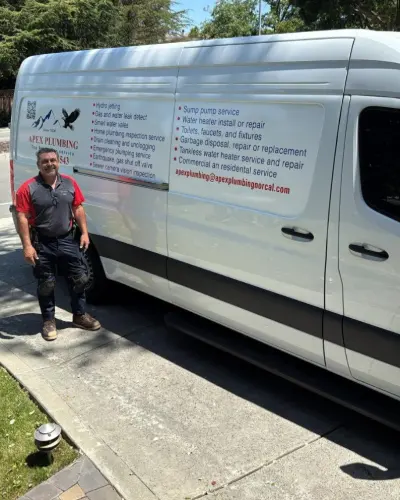
Nick, owner of Apex PlumbingLicensed C-36 plumbing contractor (#1115087) based in Martinez, serving all of Contra Costa County since 2024 with 200+ five-star Google reviews. Questions about this article? Call (925) 226-8543, any hour.